Choosing The Right Amazon Experience With Limited Time In Peru

Arrival in the Amazon

Arrival in the Amazon

Want to add the Amazon onto your next Peru Adventure? The Amazon region of Peru takes up roughly half of Peru and is home to never-ending forests, winding rivers and abundant wildlife. It is contains multiple wildlife reserves and refuges for endangered species, like the maned wolf and marsh deer. This region is also home to indigenous communities that promote ecotourism in regions with some of the richest biodiversity in the world, such as Lake Sandoval, Lake Valencia, Manu National Park, Tambopata National Reserve and Bahuaja-Sonene National Park, the only tropical, humid savannah ecosystem in Peru.

butterfly

wildlife


The Amazon is split up roughly into two parts: the North and the South. Choosing between these two regions can be difficult when first planning a trip to Peru and is often a question we receive. Which is better for a more limited time frame? How much flexibility will I have? How does the pricing compare?

toucan

In the north, while there are some land lodges, travelers will primarily find Amazon river cruises as the focal point. In contrast, in the south, all Amazon experiences are lodge-based. With a short amount of time, and wanting to fully maximize time, money, energy and overall experience, I typically recommend the South and visiting one of the lodges reached from the jump-off point of Puerto Maldonado. Our favorite lodge is Reserva Amazonica and its sister lodge Hacienda Concepcion. For those travelers with a limited time frame, I recommend the lodges in the Southern Amazon (near Puerto Maldonado) over the cruises in the Northern Amazon (near Iquitos) for several reasons :

Reserva Amazonica

Reserva Amazonica

  • Cost: the cruises can come out be around $700-$1000 per person per day, while you can stay at Reserva Amazonica (the higher end of the two lodges) in a Superior Cabana for $710 TOTAL per person all inclusive for 4 days and 3 nights. If you wanted to go for the more simple of the two lodges, Hacienda Concepcion, you could stay in your own Cabana for 4 days and 3 nights for $600 TOTAL per person).

    Cabana at Reserva Amazonica

    Cabana at Reserva Amazonica

  • Logistics/location: The cruises are in the north and run on set schedules. To get there, you have to fly from Cusco to Lima, spend the night in Lima (due to flight times) and finally to Iquitos to start your cruise. When you come back from the cruise, you will most likely have to spend another night in Lima as well. The lodges are located outside of Puerto Maldonado, just a 35 minute plane ride from Cusco. You can leave in the morning from Cusco and already be doing jungle activities by the afternoon. Also, there are convenient direct flights from Puerto Maldonado to Lima as well, so on your final day you can still do morning activities at the lodge, transfer back to Puerto Maldonado and fly to Lima in time to catch your flight home (usually international flights from Lima to the US leave late at night).
  • Activities: On the cruises, you have a fixed schedule of activities each day (ie not much flexibility). At the lodges, you have a whole excursion menu to choose from everyday (all excursions are included in the rate) and you can pick and choose what best reflects your interests and do what you feel like doing each day to make the most of your time while in the Amazon. Please also note that all activities at Reserva Amazonica and Hacienda Concepcion are shared between the lodges. So, it doesn’t matter which lodge you stay in- you will have the same opportunities.
Sunset in the Amazon

Sunset in the Amazon

Want to book your next adventure to the Peruvian Amazon? Contact us!

Your friendly South America expert,
Gretchen

Posted in Peru, Travel Advice | Tagged , , , , , | 2 Comments

NEW TRIP– Argentine Inca Trail: Trekking to the Clouds

Everyone always talks about the traditional Inca Trail in Peru leading to Machu Picchu. What many neglect to mention or have no idea about is the rest of the vast network of Inca Trails largely untouched running up and down the Andes to as far south as Argentina. We are excited to share with you our newest trekking option in Argentina: The Inca Trail to the Clouds!

Trekking to the Clouds

Trekking to the Clouds

Begin your adventure at the foot of Cerro El Gólgota in Ingeniero Maury and follow one of the southern most Inca Trails left over from the empire and end, four days later, in Quebrada de San Lorenzo, right next to Salta’s capitol! The first part of the tour takes place in a dry and arid climate. During the final segment we will enter the rainforest of Salta’s Yunga. Along the route, we will be in contact with nature and the local culture found in this special corner of Salta.

Starting at the Quebrada del Toro, our first ascent will have us surrounded by cardones (giant cacti) and will reveal the snowy peaks of Cerro San Miguel and Acay. The trail winds its way to the archaeological site of “Sillón del Inca” (Inca Seat) ruins that once belonged to the southern part of the Inca empire. We will continue the trip visiting the local inhabitants of the area, who work the fields and breed livestock in villages over 3,000 meters high. Camp sites and dinners will be the time to share moments with the group and often with locals who invite us to camp on their properties at night.

Approaching Sillon del Inca

Approaching Sillon del Inca

DAY 1: San Antonio de los Cobres to Sillon del Inca

The trip begins at the bus terminal in the city of Salta. We will take the bus that goes to San Antonio de los Cobres (departs at 8 am – time to be confirmed on each departure as it may vary). We will get off the bus at the Gendarmerie Outpost of Ingeniero Maury, next to a school.

After checking in the luggage and backpacks for the day, we will provide lunch boxes, fill our water bottles and start walking. The first part is uphill. The trail is well marked and the slopes are mild/moderate but continuous. As we ascend, the Quebrada del Toro starts looming before us in all its glory as well as the snowy peaks of Cerro San Miguel and Acay behind the hills. After three hours of walking uphill we will reach La Virgen del Caminante (The Pilgrim ́s Virgin), a reference point for many mountaineers in the area. From here, the path continues with intermittent ascents and descents, but mostly downhill.

Our destination is Sillón del Inca ruins, where our first camp will take place. We’ll have some spare time to walk around the area at this archaeological site that was once part of the Inca Empire.

TECHNICAL DATA – DAY 1

DISTANCE 9.0 KM

WALKING HOURS 6/7 HOURS

STARTING ALTITUDE 2,378 MTS

TOTAL ASCENT 1,063 MTS

TOTAL DESCENT 479 MTS

ENDING ALTITUDE 2,959 MTS

Meals: LD
Accommodations: Camping

Gorgeous views from cozy campsites

Gorgeous views from cozy campsites

DAY 2: Sillon del Inca to Lerma Valley

The second day departs from Sillón del Inca and the path will lead us over the 3,000 meters. We will walk along one of the most beautiful places of agricultural production in the area, and if we are lucky, we will see some condors flying over us. We will continue the road with a slight increase up to the maximum height of the trip in the crossing clearing, reaching 3418 meters above sea level. Here, the journey will show us one of the most spectacular views. From this point well above the clouds you will get to see the whole Lerma Valley and the city of Salta. Then, the trail descends and will lead us, accompanied by spectacular views, to the site of our second camp. The camp will take place in the company of local people, who have their agricultural production ranch. We can share experiences with them and learn about their lifestyle in the area.

TECHNICAL DATA – DAY 2

DISTANCE 11.4 KM

WALKING HOURS 6/7 HOURS

STARTING ALTITUDE 2.959 MTS

TOTAL ASCENT 665 MTS

TOTAL DESCENT 741 MTS

ENDING ALTITUDE 2.882 MTS

Meals: BLD

Accommodations: Camping

Triumph above the clouds

Triumph above the clouds

DAY 3: Lerma Valley to Yunga

The third day the trail will lead us closer to the typical wetland forest of the Yunga. We will leave our camp and begin to descend. Here, the views are completely different from the previous two days. After a short hike we will find that trees and vegetation begin to grow on the mountains and we will see numerous rivers and waterfalls. The trail continues in slight decline to a point where two mountain rivers meet. Here, we continue upstream and then go into the Yunga. Here there is a slight ascent that gets more intense towards the end of today’s trek.

TECHNICAL DATA – DAY 3

DISTANCE 14.0 KM

WALKING HOURS 7 HOURS

STARTING ALTITUDE 2.882 MTS

TOTAL ASCENT 730 MTS

TOTAL DESCENT 1,052 MTS

ENDING ALTITUDE 2.560 MTS

Meals: BLD

Accommodations: Camping

DAY 4: Yunga to Salta

We will begin the last day of our tour already immersed in Salta Yunga. The trail goes along charming landscapes towards the city of Salta. Walking on the edge of the mountain, we will enjoy the flora and fauna of the region, in contact -every few kilometers- with local inhabitants who breed cattle in these remote places. The last part of the tour will take us to the foot of the city of Salta, in the Quebrada de San Lorenzo. Once in there we will share drinks and end the trip by returning on a bus to the city of Salta.

TECHNICAL DATA – DAY 4

DISTANCE 13.6 KM

WALKING HOURS 7 HOURS

STARTING ALTITUDE 2.560 MTS

TOTAL ASCENT 409 MTS

TOTAL DESCENT 1,489 MTS

ENDING ALTITUDE 1.479 MTS

Meals: BL

Want to plan your next adventure to Argentina? Have questions about the Northwest? Contact me!

Your friendly Argentina expert,

Gretchen

Posted in Argentina, Inca Trail | Tagged , , , , , , , | Leave a comment

NEW TRIP– Lakes District: Rainforest Multisport Adventure

This epic adventure through the staggeringly beautiful Huilo Huilo rainforest is a daredevil’s dream: white water rafting, hiking, mountain biking, and ziplining, all topped off with a relaxing spa visit and a cold one from a local brewing pub!

Ziplining in the Huilo Huilo Biological Reserve

Ziplining in the Huilo Huilo Biological Reserve

DAY 1: Arrival in Huilo Huilo Biological Reserve

You’ll be picked up at the airport and taken to Neltume, a town very close to Huilo Huilo Biological Reserve: your home and base camp for the next few days. After making our way to the Reserve, we’ll check in and freshen up – ready to enjoy dinner and fuel up for the days’ adventures.

Meals: D

Accommodation: Nothofagus Hotel & Spa, Huilo Huilo

Rainforest mountain biking

Rainforest mountain biking

DAY 2: Rainforest Trekking and Mountain Biking

Don’t skimp on breakfast: today you’ll need your energy! This morning, you’ll go by 4×4 to the Reserve’s north and set off on our hike through the Andean Lakes Trail. Get ready to trek through some of the area’s most stunning natural corners, through forests, over rivers, and around lagoons forged by ancient volcanic activity. We’ll have lunch along the way – as if the only people on Earth – and continue on to begin the day’s next adventure: mountain biking. Gloves, helmets, and our “two-wheeled chariots” await us and fully equipped, we’ll descend along a country road through the woods. Our 4×4 will take us back to our hotel – where we’ll soon be ready for dinner at the Reserve.

Meals: BLD

Accommodation: Nothofagus Hotel & Spa, Huilo Huilo

White water rafting

Whitewater rafting on the Fuy River

DAY 3: Rafting and Canopy Adventure

Today’s a day of highs and lows – right from the Reserve’s watery rapids to its treetops! After breakfast, we’ll head to the Fuy River and kit up for a morning of rafting. Once everyone is dressed to impress (equipment includes wetsuits, windbreakers, life jackets, helmets and boots), our whitewater guide will teach us about rafting safety and techniques. Now the fun really begins! Board your raft and set off on an adrenalin-inducing, down-river descent. Soak in the valley and native forest from aboard your raft and live the moment: you’re flying down one of Chile’s best rafting rivers!

After shaking off the water, we’ll go back to our hotel for lunch and a short rest. This evening, the day’s second excursion – the Canopy XL tour – will be underway. Not far from Huilo Huilo Falls, you’ll take to the rainforest’s treetops on five 500m ziplines raised 90m above the ground, one of the longest zip line system in South America (430 meters). This “Flight of the Condor” canopy tour lets you see the Patagonian temperate rainforest as never before (just like our lucky feathered friends do every day!). Once we’ve landed, treat yourself to a spot of relaxation. Perhaps you’d like to visit the Lawenko Spa? Or maybe few well-earned ales at Petermann Brewery sound better? After this much-deserved downtime, we’ll finish our evening with a final dinner at the Reserve.

Meals: BLD

Accommodation: Nothofagus Hotel & Spa, Huilo Huilo

Trekking in the Huilo Huilo Biological Reserve

Trekking in the Huilo Huilo Biological Reserve

DAY 4: Check out and airport transfer

A final breakfast awaits you – as will your airport transfer, ready to take you to board your onward flight to your next adventure.

Meals: B

Want to book your trip to the Huilo Huilo Rainforest? Or start planning your next adventure to Chile? Contact me!

Your friendly Chile expert,

Gretchen

Posted in Chile, Trekking | Tagged , , , , , , , , , | Leave a comment

Top 5 Can’t-Miss Peruvian Markets

As South America’s culinary capitol, Peru has some of the best markets on the continent. While planning your next adventure to Peru, come see what we have put together as our top can’t-miss markets in Peru!

Ceviche at La Picanteria in Surquillo Market

Ceviche at La Picanteria in Surquillo Market


1) Surquillo Market, Lima

Off the beaten tourist path, the Surquillo Market in Lima, is the best place to mingle with local limeños on their lunch hour from work and try some of the best and freshest ceviche in the city. Surquillo Market is a never-ending maze that embraces all the senses. Feel the sea breeze as it makes its way through the cobblestone streets, listen to vendors shouting out the day’s deals on vibrant produce, smell juicy limes as they are squeezed over tantalizing ceviches, taste the freshest catch of the day from any one of the local food stalls and witness the lively rhythm of life in the heart of Peru’s coastal capitol! (Our favorite ceviche stand here is: La Picanteria- absolutely cannot be missed!)

Chinchero Market

Chinchero Market

2) Chinchero Market, Sacred Valley

Nestled between Cusco and Urubamba, Chinchero Market is a bustling center for locals and tourists alike. The village of Chinchero is home to numerous weaving communities and the market is centralized around this traditional art form of the area. Produce, clothes, and a wide range of other local handicrafts are also available. The market is bordered by an impressive Incan wall, believed to be part of a former Incan Palace. Peaking over the walls of the market is a 17th century Spanish colonial church built upon Incan ruins. The best days to visit this market are Tuesday, Thursday and Sunday.

San Pedro Market, Cusco

San Pedro Market, Cusco

3) San Pedro Market, Cusco

San Pedro Market is a cultural cornerstone in Cusco. Expanding over three city blocks, this massive complex is Cusco’s largest food market. Vendors crowd themselves in to sell their wares from every nook and cranny in and around the building. Colorful blankets are strewn out on the ground, with cheerful elders sitting atop small wooden stools selling spices by the pound. Across the aisle joyous towers of carefully stacked fruits of all shapes and sizes beckon as a round grinning vendor offers curious patrons slices of sweet citrus or meaty avocado. Besides, the typical produce and meat, Cusco’s central market has numerous oddities for sale as well. Tourists and locals alike, have fun trying to find more obscure items for sale in this Andean crossroads.

Incan ruins above Pisac Market

Incan ruins above Pisac Market

4) Pisac and Pisac Market, Sacred Valley

Pisac, a picturesque Andean village, is located just 45 minutes from Cusco and home to the most famous market in the Sacred Valley. Its main square is dominated by a leafy pisonary tree: the heart of the town and market. In spite of its popularity, the market retains much of its local charm; vendors from countless villages flock here to barter and sell their wares and produce.  Behind the village, a road winds slowly uphill ending at the ancient ruins of Pisac. The ruins are some of the finest and largest in the entire valley. Despite the excellent condition of many of the structures, little is conclusively known about the site’s actual purpose. It appears to have been part city, part ceremonial center, and part military complex. It might have been a royal estate of the Inca emperor Pachacuti. Visitors to this market should not miss out on these incredible ruins. Not to mention the hike down boasts breathtaking views of the outstretching Sacred Valley.

Gretchen at Mercado Central, Arequipa

Gretchen at Mercado Central, Arequipa

5) Mercado Central, Arequipa

Mercado Central is Arequipa’s principal farmers market and excellent place to mix with arequipeños and try some of the region’s best food! The market spans several blocks and has a second level filled with small food carts and cafes. One of the best times to visit is in the morning for breakfast; the second floor cafes are a preferred local hotspot and great for people watching.

Want to plan your next Peruvian adventure? Contact us!

Your friendly South America expert,

Gretchen

Posted in Inca Trail, Peru, Travel Advice | Tagged , , , , , , , | Leave a comment

Top 5 Buenos Aires Steakhouses

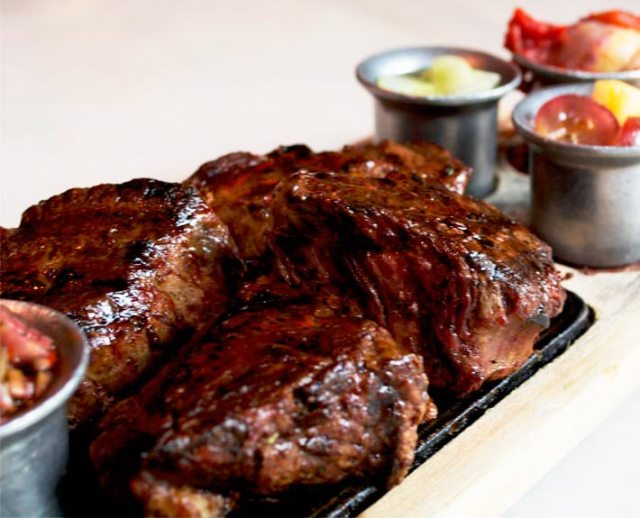
When planning a trip to Buenos Aires and creating one’s “must-do” list, trying the mythical Argentine beef is a high desire for most travelers. But where do you go to taste true, authentic to-die-for beef cuts in BA? Fear not. We have done our homework and here is a top-five list of the must-have parilla experiences in the “Paris of the South”.

  1. Parrilla Don Julio – Palermo
  2. Gran Parilla del Plata – San Telmo
  3. La Brigada – San Telmo
  4. La Cabrera – Palermo
  5. Le Grill – Puerto Madero
  6. Fervor Brasas de Campo y Mar – Recoleta
  7. Lo De Jesus – Palermo

don-julio
Parilla Don Julio

1) Parrilla Don Julio

Located in Palermo Soho, this heavenly restaurant boasts an epic wine list and pieces of meat so tender you would swear that the chef himself had struck a deal with the devil to produce such perfection. Other specialties of the house include grilled provoleta cheese along with dense and aromatic mushrooms. This place is not to be missed.

  • NOTE: You will need to make a reservation at least 3 months in advance.

Gran Parilla de la Plata
Gran Parilla del Plata

2) Gran Parilla del Plata

This turn-of-the-century, butcher shop converted restaurant is my ultimate favorite in the city. Nestled in the bohemian neighborhood of San Telmo, the divine aromas that start wafting out of their kitchens in the evenings engulf the weary traveler and locals alike with a warmth and comfort that only one’s grandmother’s cooking might rival. Try the ojo de bife or matambre cuts and pop the cork on a ripe Malbec- enjoy!


La Brigada
La Brigada

3) La Brigada

Another classic San Telmo restaurant, this place feels like a home/family gathering. Often times seated two inches from your neighbor, make new friends and start comparing dishes as the servers whisk by you with plate after plate of tantalizing asado. The steaks here are straightforward and absolutely delicious!


La Cabrera
La Cabrera

4) La Cabrera

For good reason, this is one of the most famous parillas in the city. Centrally located in Palermo, La Cabrera has made an international name for itself over the years. That said, it is often filled with tourists but don’t let that keep you away. The provoleta and Lomo marinada de verduras are bliss on a plate.


Le Grill
Le Grill

5) Le Grill

Want to elevate your parilla experience? Head over to Puerto Madero for a chic dining experience at Le Grill. Complete with an excellent wine list, enjoy the views of this upscale, port neighborhood and dig in!


6) Fervor Brasas de Campo y Mar

Bonus 6th steakhouse you will love. A great option if you are staying Recoleta!

7) Lo de Jesus

Bonus #2 — It is more local than La Cabrera and slightly less expensive, but it has all the quality and an incredible wine list. Located in Palermo.


Want to plan your next adventure to Buenos Aires? Want us to help you with reservations? Contact me!

Your friendly Argentina expert,
Gretchen

Posted in Argentina, Chile, Travel Advice | Tagged , , , , , , , | 1 Comment

Trip Report: Galapagos Islands Cruise: September 2016

Staff Member: Susie Youn
Travel Dates: September 25-October 2, 2016
Destinations Visited: Ecuador: Quito and Galapagos Islands

Day 1 / September 25: Arrival in Quito, Ecuador

I landed at the Quito Mariscal Sucre International Airport shortly before midnight.  At that time of night, I found it easy to catch a cab to my hotel.  The ride was a great reintroduction to the way people drive in South America.  My cab driver used all four of the winding mountainous highway lanes (all heading in the same direction) on the drive to my hotel in the Mariscal district in the middle of Quito.  But I arrived in record time, which was great after the long day of travel from the United States.

Day 2 / September 26: Sightseeing in Quito

We had a private tour with an English-speaking driver for my one full day of sightseeing in Quito and the equator.  We went first to the TelefériQo, a sky tram that took us up Volcán Pichincha, for a marvelous view of Quito below.  What a beautiful way to get my bearings in Quito as we could see all of Quito below us from north to south.

View of Quito from

View of Quito from the Teleférico

  • Travel details:  The TelefériQo ride takes about 10 minutes to travel the 2.5 km from the base to the top (13,451 feet/4,100 meters).  The cost for an adult is $8.50.  Optional activities: hiking to the summit of Rucu Pichincha (15,413 feet/4,698 meters) (roughly 3 hours for very fit walkers as you are at altitude), horseback riding ($10 per hour).  If you have small children, there’s an amusement park, VulQano Park, a short walk below the TelefériQo base.

After getting the grand overview of Quito, I needed to visit the equator, of course, which runs through Ecuador (hence, the name).  To do that, I went to the Museo Inti Nan In Situ, where a friendly guide took our group of four on a tour of Ecuadorean animals and culture, and of course, some education about the equator.  The most interesting part of the tour was the fun demonstrations, including balancing an egg on a head of a nail.

  • Travel details:  The Museo Inti Nan In Situ costs $4 per person.  I also tipped the guide $1.  Don’t forget your passport as your guide will stamp it, showing you visited the equator.

Being in Ecuador and among so many volcanoes, we next stopped for a quick look of the volcanic caldera in the Pululahua Geobotanical Reserve and the only caldera where the inhabitants cultivate the land.  The Reserve has a row of native Ecuadorean handicraft shops, where we caught our first glimpse of the fine handmade clothing made from alpaca hair.

Basilica del Voto

Basilica del Voto Nacional

Then, for the highlight of the day for me, we visited the Basilica del Voto Nacional, the largest neo-Gothic cathedral in the Americas.  The Basilica was just as beautiful as any I have visited in Europe.  The distinguishing feature of the Basilica is, instead of gargoyles, the roof of the Basilica is decorated with fantastical statues of native Ecuadorean animals, like iguanas and land tortoises.

  • Travel details:  Entry into the Basilica costs $2. Entry to the upper floors also costs $2.  I recommend you climb the interior spiral stone staircases for the view.  For those who love heights, you can cross over the main transept of the Basilica and then climb fire escape ladders for an amazing view of Quito below.

Our last sightseeing stop was El Panecillo, a hill to the south of Old Town Quito.  On the top of the hill was La Virgen de Quito, perhaps the only Madonna in the world this large with wings.  We finished off our whirlwind tour of Quito by having sushi at the number one rated TripAdvisor restaurant in Quito, Shibumi Sushi Bar.

Day 3 / September 27: Quito and Start of Galapagos Islands Cruise – San Cristobal Island (Kicker Rock)

Natural ParadiseToday, we started our 8-Day Galapagos cruise!  We took a mid-morning flight from Quito to San Cristobal Island.  The flight takes about 3.5 hours, with a short stop in Guayaquil. We arrived on San Cristobal Island about 12:30 pm local time, as the Galapagos Islands are a time zone behind Quito.  After collecting our bags, we were met by the boat representative right outside the airport building.  Then, our group was transported by private van, a short 10-15 minute drive, to the dock, where we took a panga (dingy) ride to our magnificent luxury cruise ship, the Natural Paradise, which was to be our home for the next five days.

Kicker Rock

Kicker Rock

After lunch, we visited Kicker Rock, a stunning rock formation located off the western shore of San Cristobal Island. There, we jumped into the water for the first of many snorkeling excursions.  The water felt great after all the traveling to get to the Galapagos Islands!

After dinner, where we got to know our cruise mates, we got a briefing from James, our Galapagos National Park guide.  Then, we turned in early, rocked to sleep by the waves gently lapping against the sides of the Natural Paradise.

Day 4 / September 28: North Seymour Island and Santa Fe Island

Blue-Footed Booby Mating Dance

Blue-Footed Booby Mating Dance

This morning, after breakfast, we got our first look at island life when we visited North Seymour Island.  James gave us the first of his informative lectures on Galapagos animals as we saw frigate birds, blue-footed boobies, and land iguanas.  The boobies put on a show for us, lifting their feet in a mating dance, that we, of course, all had to imitate. James explained the connection between frigate birds and boobies, where the frigate birds rely on the boobies for food.

We went on two snorkel adventures today.  We saw tons of colorful marine reef fish, as well as turtles peacefully gliding through the water.

Sea Lions on the Beach

Sea Lions on the Beach

After lunch, we took a walk on Santa Fe Island.  We landed on a beach littered with sea lions.  They lay there calmly in the afternoon sun as we walked among them, but we always kept a safe distance between us and the sea lions to protect the animals.   Then we walked to a tall Opuntia prickly pear cactus forest, where we saw land iguanas.  Our guide explained that the male land iguanas protect their territory, which may encompass several prickly pear cacti, which provide food and water for the iguanas.

Day 5 / September 29: Santa Cruz Island (El Chato Ranch, Charles Darwin Research Center, and Puerto Ayora)

Giant Land Tortoise Stretching Its Two Foot Long Neck

Giant Land Tortoise Stretching Its Two Foot Long Neck

In the morning, we took a panga ride to the Puerto Ayora pier, where we got in a private van, to drive up to the Highlands of Santa Cruz Island.  Our destination was the El Chato Ranch, which serves as a refuge for giant land tortoises. During our stroll on the property, we saw about a hundred of these individuals.  They move faster than I thought!   On our way back to the van, we walked through some large lava tunnels, which had lights and handrails to make our descent into the depths easier.

Our van deposited us at the entrance of the Charles Darwin Research Center, which was in the middle of remodeling.  Much scientific research occurs here, but alas, out of sight of visitors’ eyes.  We watched an interesting video highlighting research conducted at the Center, however, and saw two different kinds of land tortoises in exhibit pens.

We had the rest of the day at our leisure.  Some of the group decided to have lunch in Puerto Ayora, while some of us went back to the Natural Paradise for more of the delicious food on board.  Most of us spent the afternoon exploring Puerto Ayora and catching up on the outside world as almost all of the bars and restaurants in Puerto Ayora have WiFi connections.

Day 6 / September 30: Santiago Island (Sullivan Bay) and Bartholomew Island

Our Guide Explaining the Geography and Geology of the Galapagos Islands

Our Guide Explaining the Geography and Geology of the Galapagos Islands

This morning, we went for a truly otherworldly hike on Santiago Island. We took a panga ride to the edge of an immense black lava field at Sullivan Bay.  When we landed on the island, we had to avoid an alpha fur seal lion, who was on the pier, calling to his pups to come in the water to play.  Our hike completely absorbed us.  The photographers among us had a field day taking pictures of the lava.  I liked seeing pictures in the lava; it was like seeing pictures in the clouds, except beneath my feet!

After visiting the lava field, we took another hike at Puerto Egas, which was chock full of wildlife.  We saw fur seal lions lying in and beneath the brush, land iguanas eating the cacti fruit, a couple of short-eared brown owls, and many, many birds.

After the hike, we went snorkeling for about an hour.  During this time, we saw an abundance of marine life – fur seal lions frolicking in the water, turtles, rays, and a couple of white-tip reef sharks.

After lunch, we took a panga ride to a soft sand beach.  Here, we went on a snorkel excursion, drifting with the current around Pinnacle Rock.  We saw lots of marine wildlife, including penguins on the rocky shore.  One lucky person in our group had a curious penguin tap his face mask.

In the mid-afternoon, we went for a hike on Bartholomew Island.  We climbed 375 stairs up to the summit of an extinct volcano.  The views of Pinnacle Rock, with the setting sun casting the most perfect light on everyone, made this the perfect picture stop.

View of Bartholomew Island

View of Pinnacle Rock at Sunset

Day 7 / October 1: South Plaza Island, End of Galapagos Islands Cruise, and Gordon Rocks Dive

We woke up early this morning to go on our last hike of the cruise on South Plaza Island.  Among other sights, we got our last glimpse of the intriguing land iguanas guarding their Opuntia cacti.

After breakfast, we transferred off the Natural Paradise at the north end of Santa Cruz Island.  We were sad to leave the Natural Paradise, as the Natural Paradise offers 10 additional days of visits to the other Galapagos islands, but we had more of Ecuador to see! Some of us went to the Baltra airport, but four of us decided to continue on to our next adventure — scuba diving in the Galapagos at Gordon Rocks!  Our Natural Paradise guide, who was also a dive master and scuba diving guide, arranged for a dive boat to meet us at the ferry port and we were whisked off to Gordon Rocks, which is located to the east of Santa Cruz Island.  Gordon Rocks is a premier dive site to see hammerhead sharks.  But it’s not for novices, due to the strong currents in the area.  That being said, the dive was definitely worth the time and effort!

Diving at Gordon Rocks - Turtle Swimming

A Turtle Sighting While Diving at Gordon Rocks

Our dive day consisted of three dives: a check dive and two dives at Gordon Rocks.  Due to the current (and my excitement), I had some issues with maintaining my buoyancy. Our group also had a couple of stops where we had to kick hard to stay in place so the group could stay together, but thankfully, we did not encounter the dangerous down currents we had been warned about.  We did see some marvelous marine life, including a sunfish (mola mola), turtles, eagle rays, a Moray eel, and hammerhead sharks!  We also had the best safety stop I have ever experienced.  A curious sea lion wanted to see what all the humans were doing hanging out at 15 feet below the surface so it kept diving and swimming around us.  I have never been so entertained during any 15-minute safety stop.

Upon returning to the ferry pier, the dive shop took us back to Puerto Ayora.  After our early exhausting day, we explored Puerto Ayora a little bit.  One of our cruise mates recommended we check out the outdoor seafood restaurants located on Charles Binford Avenue for dinner.  These restaurants all seemed to have similar offerings and showcased spiny lobster, so we chose one almost at random, sat down and toasted the end of our day with a caipirinha and spiny lobster.

Day 8 / October 2: Puerto Ayora, Santa Cruz Island

After all of the activities of the last week, we took it easy and relaxed in the small port town of Puerto Ayora.  We relaxed, caught up with the outside world by using the Internet available in all of the restaurants in town, and stretched our land legs by wandering the streets of Puerto Ayora.

Day 9 / October 3: Return to Mainland Ecuador

At 7 am, we took a taxi to the ferry pier at the north end of Santa Cruz Island.  There we took the ferry ($1) across and the free airport bus to Baltra Airport.  We had an extra hour to kill as our hotel recommended we leave for the airport three hours before our 10 am flight, but better safe than sorry.  Our flight back to the mainland was uneventful.  Which, when you’re traveling, is sometimes the best outcome.

I thoroughly enjoyed my once-in-a-lifetime Galapagos Islands cruise on the Natural Paradise.  If you are interested in more information about the Natural Paradise and any of its 5, 8, 11, 12 or 15-day itineraries or the Galapagos Islands and/or Ecuador, please contact us.

All photographs by Darrell Ansted. Please give credit if using any of the photographs contained in this AWR blog posting.

Save

Save
Posted in Ecuador, Family Travel, Galapagos, Luxury, Trip Journals, Trip Photos | Tagged , , , | 3 Comments

Costa Rica National Parks with Beaches: Cahuita or Manuel Antonio?

Cahuita and Manuel Antonio are amazing for accessible wildlife!

Costa Rica richly deserves its name “Rich Coast” since it’s bounded on two sides by broad expanses of water: on the western side, the Pacific Ocean, and on the eastern side, the Caribbean Sea.  Travelers to Costa Rica will discover loads of beach destinations, but two of our favorites include more than simply fine sand, they offer the nature enthusiast fantastic opportunities for breath-taking wildlife encounters and nature photography.  These two areas are

  • Cahuita National Park, on the eastern Caribbean coast
  • Manuel Antonio National Park, on the western Pacific coast

While they are both equally excellent parks worth visiting, your needs or preferences may point to one or the other as being better for you on your next trip to Costa Rica.

The Parks – An Overview

Both national parks share striking similarities in many respects.  Both are small nature reserves, approximately 2,000 acres in size.  Both feature beautiful beaches fringed by lush, humid tropical rainforest.  Wildlife is abundant and approachable in both parks, and similar in terms of diversity and species, with one difference being Manuel Antonio’s fun resident troops of squirrel monkeys and occasional flocks of noisy scarlet macaws streaming through the canopy.  Both parks are easy to enter and navigate on your own, but we like to book a guided tour on the first morning in the area to help our travelers identify the wildlife and get a lay of the park for future visits.

Cahuita National Park

Sloth in Cahuita

Sloth in Cahuita

Situated about 4 hours east of San Jose, this park is easily accessible from the seaside town of Puerto Viejo.  Here the cultural vibe is distinctly Caribbean, making a unique departure from the more typical Costa Rican culture you’ll find everywhere else.  Snorkeling and diving – since Cahuita is on the Caribbean side – can be outstanding.   The park has a number of easy nature trails for wildlife viewing, where one can see monkeys, sloths, squirrels, white-nosed coati, plus phenomenal birds and insects, and a dizzying array of plant life.

OLYMPUS DIGITAL CAMERA

Cahuita

Long beaches, like the black sand Playa Negra in Puerto Viejo, are found here in the Puerto Viejo–Cahuita–Manzanilo area.  There are bright sand beaches too, like Playa Blanca, which is inside Cahuita National Park and reaches almost two miles in length.  While the beach is scenic, not all of it is recommended for swimming – for the best swimming, head toward the center of the Suarez River estuary.  Near the river mouth, there is a huge lagoon, and at the tip, the sand is fine, water is clear during much of the year, and the coral reef is very close, making it good for snorkeling or diving.  From here, there are beach strolling options all the way to nearby Puerto Vargas.  Beaches at Punta Uva, Playa Chiquita, Playa Cocles (where surfing can be popular, and lifeguards are on staff) and Manzanillo are worth checking out.  Just a little further down the road from Manzanillo (itself, about 8 miles from Puerto Viejo) is Gandoca, a park that offers seasonal opportunities for observing sea turtle nesting.  In town, check out the wonderful Jaguar Rescue Center.  Regular bus services and affordable taxis connect travelers and locals throughout the area.

Best times to go to Cahuita

Calm seas in Cahuita can deliver great snorkeling

Calm seas in Cahuita can deliver great snorkeling

Overall, climatically, the best times are February through May, and again August through October. June, July, November, and December are arguably months to avoid due to rains plus November and December can see seasonal closures of some businesses.  The best time of year for snorkeling in Cahuita (clearest water, calmest seas) is September and October, while May can be good for swimming.  The best time for sea turtles (a night-time tour) in nearby Gandoca is between April and August.

How to visit Puerto Viejo and Cahuita

We arrange comfortable van transfers from San Jose and other points in Costa Rica to Puerto Viejo.  As for hotels, we particularly like the more modest 3-star and intimate boutique hotels, though we’re always happy to match a traveler’s preferred style of travel. Also nearby are two other highly interesting places to visit – Tortuguero and Selva Bananito Lodge – if you have more time available (like an extra 2 or 3 nights) for the region.

Manuel Antonio National Park

Manuel Antonio vista

Manuel Antonio vista

Manuel Antonio is one of Costa Rica’s premier tourist hot spots so it contrasts with the less-developed atmosphere in Puerto Viejo and Cahuita.  The park is located south of San Jose, about a three-hour drive, on Costa Rica’s western Pacific coast.  However, especially for travelers looking for just a taste of the beach or who are short on time (for example, travelers with just 2 nights to spare for the coast), then this area in particular sparkles as a fantastic option.

The Park

Squirrel monkey - Manuel Antonio

Squirrel monkey – Manuel Antonio

Home to what National Geographic once labeled as a top 20 beach in the world, the more alluring draw is probably the wildlife viewing.  Here animals are habituated to people so the animals are often unafraid and approachable.  Travelers can see white-faced monkeys, sloths, coatis, raccoons, iguanas and many bird species, as well as the Costa Rican squirrel monkey, which is endemic to Manuel Antonio and very hard to find anywhere else.

Manuel Antonio beach

Manuel Antonio beach

Several stunning beaches are found in the park (primarily Espadilla Sur, Manuel Antonio, and Puerto Escondido), plus a small lagoon and a mangrove forest.  Connecting Manuel Antonio and Espadilla Sur beaches, Punta Catedral offers an attractive ocean vista and is a nice side-hike off the main trail.

Special notes – The park is closed on Mondays. Most hotels are situated on a scenic ridge overlooking the ocean and not on the beach – this is to promote beach conservation in the area.

What to do in Manuel Antonio

Villa Vanilla - near Manuel Antonio

Villa Vanilla – near Manuel Antonio

There are loads of excellent activities in the area, ranging from strolling the long public beach outside the park to horse riding on the beach to surfing to nature walks.  We outlined a number of our favorites in a previous post, the Top 8 Things to do in Manuel Antonio.  If you have specific interests, please let us know and we can advise options.

When to visit Manuel Antonio

The best time to go is December through April, though rainy season months like May often see afternoon or evening showers, meaning mornings are often clear.  The worst rain is usually in September or October.

How to Visit

AWR Clients Riding Horses at Manual Antonio

AWR Clients Riding Horses at Manuel Antonio

The drive between Manuel Antonio and San Jose International Airport is only about 3 hours now that the new highway is in place.  We organize private van transfers in such a way that if your departure flight on your final day is at 1:30pm or later, we can get you to the airport in time for your departure.  Getting to Manuel Antonio is just as easy and travelers have the choice of departing from your present location (like Arenal Volcano or the Monteverde Cloud Forest) to Manuel Antonio either in the morning – allowing for a free afternoon on the beach – or in the afternoon, allowing a free morning wherever you are before visiting Manuel Antonio.

Summary

In a perfect world, you’d visit both parks (and both coasts, by extension) on an 11-13 day grand “Coast to Coast” custom adventure.  But most of our travelers only have between 7-9 days, and in that case, it’s better to pick one coast and save the other for next time.  If you’ve never been to Costa Rica before, then you’ll probably want to include Arenal Volcano in your itinerary and Manuel Antonio makes a convenient second or third destination (for example, after a stop in Monteverde).

If you prefer getting a little more off-the-beaten-path, then head to rustic and wooly Puerto Viejo and Cahuita.  From here, it’s easy to get away from the crowds on one of the area’s many beaches and the area as a whole is far less visited than Manuel Antonio.  Seasonally, the area offers some of the best snorkeling in the country too.  Tortuguero, with its “Amazon-in-miniature” feel, is close by, so an 8-day trip combining the Caribbean coast’s Tortuguero and Cahuita would be fabulous for easy-going nature lovers looking for wildlife and beach.

Contact us and we’ll help design the ultimate Costa Rica itinerary for you based on your needs, interests, and budget.  We hope you’re able to experience why Costa Rica lives up to its Rich Coast name!

Save

Posted in Costa Rica | Leave a comment

Gastronomic Experiences in South America: Happy Thanksgiving!

Happy Thanksgiving everyone! On this day of gastronomic brilliance, I wanted to take the time to highlight some of our best foodie experiences in South America. Come travel with us to Santiago, Cusco and Buenos Aires as we explore vibrant markets, visit historic kitchens, try our hand at cultural dishes all while under the guidance of local, passionate chefs!

El Mercado Central, Santiago

El Mercado Central, Santiago

SANTIAGO, CHILE

We head first to Santiago! The adventure starts driving downtown to La Vega, a renowned market famous with locals who crowd the stalls from dawn until early afternoon each day. After exploring the market maze and admiring the variety of fruits, vegetables, cheeses, spices and meats, we start buying ingredients for the menu to be prepared later with our chef-guide. Our menu will consist of an olive oil tasting (Chile is world renowned for its olive oils) and a dish such as ceviche to start with, followed by our choice of main course to be enjoyed with wine and a typical Chilean dessert with coffee.

We cross over the bridge to the other side of the Mapocho river and head to nearby Mercado Central, a fresh fish market with wonderful architecture, popular with locals and tourists alike. Here we really get a flavor of local life and see where the city center dwellers come to purchase their fish to make dishes such as machas a la parmesana (razor clams with parmesan) or Reineta a la manteca (Buttered pomfret). We select the final ingredients for our tasty Chilean meal before driving uptown to the chef’s house.

When we arrive we start to prepare our chosen meal in the chef’s specially-designed kitchen. While ingredients are simmering away we enjoy a tasty Chilean cocktail and talk with the chef about the ingredients, their provenance and their relationship to Chilean culture. We enjoy some delicious appetizers with our aperitif and then sit down to the main meal to enjoy the fruits of our labor!

Satisfied from our downtown exploration, the home-cooked food and good Chilean wine, we are driven back to our hotel to rest.

Cooking Nuevo Andino, Peruvian cuisine in Cusco

Cooking Nuevo Andino, Peruvian cuisine in Cusco

CUSCO, PERU

We continue heading north, to the Andean highlands and land in Cusco. Early in the morning, we depart from our Hotel to Cusco’s bustling San Pedro Market, where we receive a briefing from our Chef about local ingredients, and also have the opportunity to buy them, interacting with local producers and suppliers. Continue on to the Sacred Valley, to Pio Vazquez’s restaurant Huacatay, located in the town of Urubamba. Huacatay restaurant is a new Andean style kitchen where every dish is not only an experience for the senses, but also a refuge where aesthetics and atmosphere are part of the charm. Here, we learn in a dynamic and interactive way about the local gastronomy as well as cooking techniques and about organic products of the area. We will prepare an appetizer, main dish, and a dessert, all inspired by traditional Peruvian dishes, accompanied by a Pisco cocktail. In the evening, we return to Cusco.

The Argentine Experience, Buenos Aires, Argentina

The Argentine Experience, Buenos Aires, Argentina

BUENOS AIRES, ARGENTINA

Finally, we end back in the “Paris of the South”, Buenos Aires, Argentina. Buenos Aires, in recent years, has made a splash in the gastronomic world of closed door supper clubs. Tonight, we head off for the ultimate dinner! Received with a wine based cocktail and a Patagonian trout tartar, we learn how to create empanadas using the traditional “repulgue” technique and fill them with a choice of gourmet fillings. Then, we enjoy a typical argentine picada with grilled provoleta cheese, sliced chorizo sausage, and the always-amazing mollejas. Be ready to be blown away with a 250g tender loin that has been dried cured for 24hs. We learn the best parts of Argentine culture including our chef’s favorite local hand gestures. As a pre-dessert, be prepared to try queso y dulce. For dessert, we try our hand at crafting our own alfajores, Argentina’s national sweet, where cookies, dulce de leche, melted chocolate fondue and coconut shavings combine to delight the senses. Finally, we learn about the history and etiquette of mate, Argentina’s national pastime, and prepare it from scratch. Throughout dinner, we enjoy a wine pairing of three wines specially chosen by Zuccardi Winery, including a Torrontes from Salta, and a Blend and Malbec from Valle de Uco, Mendoza.

Want to enjoy the gastronomic delights of South America? Feel free to contact me.

Happy Thanksgiving to all and we look forward to hosting you on your next adventure!

Your Friendly South America Expert,

Gretchen

Posted in Argentina, Chile, Patagonia, Peru, Travel Advice | Tagged , , , , , , , , , , | Leave a comment

Argentina’s Best Kept Secret: The Northwest

Seven Colored Hills in Humahuaca, Jujuy

Seven Colored Hills in Humahuaca, Jujuy

Northwest Argentina is beckoning! Come hike through the multicolored hills and crimson canyons of Jujuy. Follow llamas across epic salt flats where all perception is lost and land and sky seamlessly mingle. Trek among some of the most ancient Cacti on the South American continent in Los Cardones National Park. Excite the senses in daily markets and taste provincial cheeses and jams at local estancias of Tucuman. Finally, pay a visit to the one-of-a-kind James Turrell Light Museum and soak up the sun while sampling the best whites and reds in the heart of Salta’s high altitude vineyards!

Salinas Grandes, Jujuy

Salinas Grandes, Jujuy

Northwest Argentina has something for everyone. With its unique history and vibrant culture, we are excited to introduce it as a new destination for our guests. Raft, horseback ride, bike and hike through jungle, high desert, massive salt flats, lush rolling hills, or between picturesque vineyards. The region is easily added on as an extension to any trip in Argentina, Chile or  (direct flights from Buenos Aires, Iguazu, Mendoza, and Lima to Salta, the heart of this region).

Salta Church, Salta

Salta Church, Salta

On our Northwest Argentina: Culture, Food and Mountains Tour, start in the province of Jujuy near Humahuaca. Designated a UNESCO World Heritage Site in 2003, the seven-colored hills in Humahuaca Canyon are home to 10,000 years of human traditions, music, art and religious beliefs that still thrive today throughout the region’s villages. Stay at the base of these rainbow hills and explore the nearby salt flats and llama breeding grounds. Not yet overwhelmed by tourists, this area is majestic and humbling. Continue on to the city of Salta, capitol to the state with the same name. Let the flavorful juices dribble down your chin, as you devour the famous salteña empanadas stuffed with beef and spices and explore the striking red-and-gold baroque San Francisco Church, built in 1625. Meander over to the central Plaza 9 de Julio, lined with cafes, colonial architecture and dominated by the pale pink Salta Cathedral (beautifully lit in the evenings) and the MAAM (Museo de Arqueologia de Alta Montana de Salta); order a café con leche while observing the unique pace of life in this rustic yet urban center.

Los Cardones National Park, Salta

Los Cardones National Park, Salta

On our Northwest Argentina: Wine and Canyons tour, continue south of Salta and drive through Los Cardones National Park filled with ancient cacti and scenic vistas, visit the quaint town of Cachi, and end in Molinos-the gateway to the Hess’ Colome Vineyard and Estate. Smell the peppered, desert air as you sit in the shade of the ancient pepper tree that accents the main patio of Hacienda de Molinos. Taste the dark sapphire-colored wine produced in the world’s highest vineyards and listen to the wind as it combs through the Andes from the neighboring Atacama Desert. See how tradition, art and elegance collide in this remote haven. Finally, feel yourself brush off initial uncertainty of the mysterious and harsh terrain and succumb to tranquility while settling in among the exquisite vineyards of Cafayate.

Colome Vineyard, Salta

Colome Vineyard, Salta

Want to start planning your next adventure to Northwest Argentina? Contact me!

Your friendly Argentina expert,

Gretchen

Posted in Argentina, Chile, Trekking | Tagged , , , , , , , , , , , , | Leave a comment

Further Afield in Chile: Exploring the Wonders of Atacama Explora

Arriving in the Atacama Desert, I was speechless as the plane began to descend into Calama, the region’s capitol. The austere and Martian desert stretched out in every direction and was accented with epic snow-capped volcanoes in shades of fiery orange and rusty red; the salt flats beckoned to the east while smaller, salt mountains signaled the mouth of the Moon Valley to the south.

explora-atacama-desert-1

Atacama, Chile

Met at the airport by my Explora Atacama hosts, I was given my introduction to this remote region of Chile, “The first European explorers to reach what is now known as the Atacama Desert were drawn by tales of a land rich in gold located somewhere south of the Inca Empire. It was due to this quest that the Spanish conquistador, Diego de Almagro, after a perilous journey across the Andes Mountains, became the first European adventurer to arrive in Chile and set foot in Atacama’s arid expanse. To this day, Atacama continues to offer a singular experience – a stunning encounter with mesmerizing traditions, forms and colors in a remote corner of the planet.”

After almost two hours of skirting the magnificent and impressive geological formations found in the Moon Valley, we arrived in San Pedro de Atacama- our base camp for a full range of adventurous activities over the coming week.

explora-atacama-desert-4

Cycling in Atacama

During my stay at Explora Atacama I was consistently surrounded by absolutely phenomenal guides who were remarkably passionate and knowledgeable about their surroundings. Any questions regarding history, flora, fauna, geology, astronomy, local food and culture and more were thoughtfully and thoroughly answered with energetic responses. Our guides, Luis and Oscar, in particular were some of the most professional and talented guides I have ever had. They consistently went out of their way to make our experience the best possible.

Just a few of my favorite adventure excursions while at Explora Atacama were

  • Volcano Climbing Cerro Toco (18,386 ft) and Lascar Volcano (18,346)
  • Bicycling through the Garganta del Diablo Canyon (Devils throat Canyon)
  • Hiking in the Moon Valley and along Rio Blanco to the geysers

explora-atacama-volcano-climbing

Licancabur Volcano

Volcano Climbing, Cerro Toco (18,386 ft): Departure from Explora by van. Begin the ascent at an old sulfur plant and ACT (Atacama Cosmology Telescope) at 5,300 m (17,380 ft). Climb along a steep, but well-marked path for 1 to 2 hours. Toco is an ideal introduction to high mountain climbing and offers panoramic views of Chile, Bolivia, and the surrounding volcanoes.

Volcano Climbing, Lascar Volcano (18,346 ft): Departure from Explora by van to Laguna Lejia and begin to climb (start at 5000 meters). Ascend between 2.5 and 4 hours across rock and volcanic ash. Arrival at the crater allows for total appreciation of the morning’s hard work. It is possible to continue up to the summit (another 40 min) climbing down is by rope howling for 1.5 hours. Enjoy a picnic lunch back at the van at the end of descent.

Cycling, Garganta del Diablo: Depart from the lodge, crossing the Catarpe valley towards the Garganta del Diablo. From here, wind your way through epic walls of gypsum and crystallized salt. During this bike ride, experience some of the local culture and visit the San Isidro chapel.

Hiking, Moon Valley: Departure from Explora by van towards the Valle de la Luna (Moon Valley). Here, appreciate the variations of sunlight and the spectacular landscapes of the Cordillera de la Sal while hiking through ancient dunes and bizarre rock formations. Return to the lodge by van.

explora-atacama-valle-de-la-luna

Valle de la Luna

Finally, one of the most amazing features at Explora Atacama is their onsite observatory. The Atacama Desert is used by NASA as one of the primary global locations for celestial observation given its clear skies and lack of light pollution. The observatory at Explora allows guests to have the chance to take a star gazing hobby to the next level. While I was at Explora I had the mind-boggling chance to see Saturn and its rings as well as get an absolutely magnificent view of the craters on the moon!

explora-atacama-observatory

Observatory at Explora Atacama

Visiting Atacama, is a riveting way to begin an adventurous trip to Chile and acts as an amazing counterpoint to the wintry Patagonian steppe and granite mountains of Torres del Paine.

For those, wishing to continue in Explora fashion and hoping to continue onto Patagonia, Explora has another lodge in the heart of Torres del Paine National Park (check out my blog on Explora Patagonia here!). Guests traveling with Adventures Within Reach and staying at two Explora Lodges receive 10% off of their trip.

Views from Explora Patagonia, Torres del Paine

Views from Explora Patagonia, Torres del Paine

Another way to continue your journey from the Explora Atacama Lodge, consider joining one of Explora’s Travesías onto Bolivia or Argentina. Explora Travesías are journeys in which guests travel privately between countries, staying along the way in special Explora camps and finishing or starting in one of the Explora lodges. The drive allows guests to access hiking routes along the way in some of the world’s most isolated landscapes.

Salta, Argentina

Salta, Argentina

During these Travesías travelers will experience the sublime silence and multi-colored valleys of the majestic Andes: the natural border between Bolivia, Argentina and Chile. Depending on guests’ desired travel routes, these Travesías can be taken either from Argentina or Chile or, Bolivia or Chile, following the same itinerary.

Uyuni Salt Flats, Bolivia

Uyuni Salt Flats, Bolivia

Vicuna in the Bolivian altiplano

Vicuna in the Bolivian altiplano

Want to start planning your own trip to Atacama? Contact me!

Your Friendly Chile Expert,

Gretchen

Save

Save

Save

Save

Save

Save

Posted in Argentina, Chile | Tagged , , , , , , , , , , , , | 1 Comment